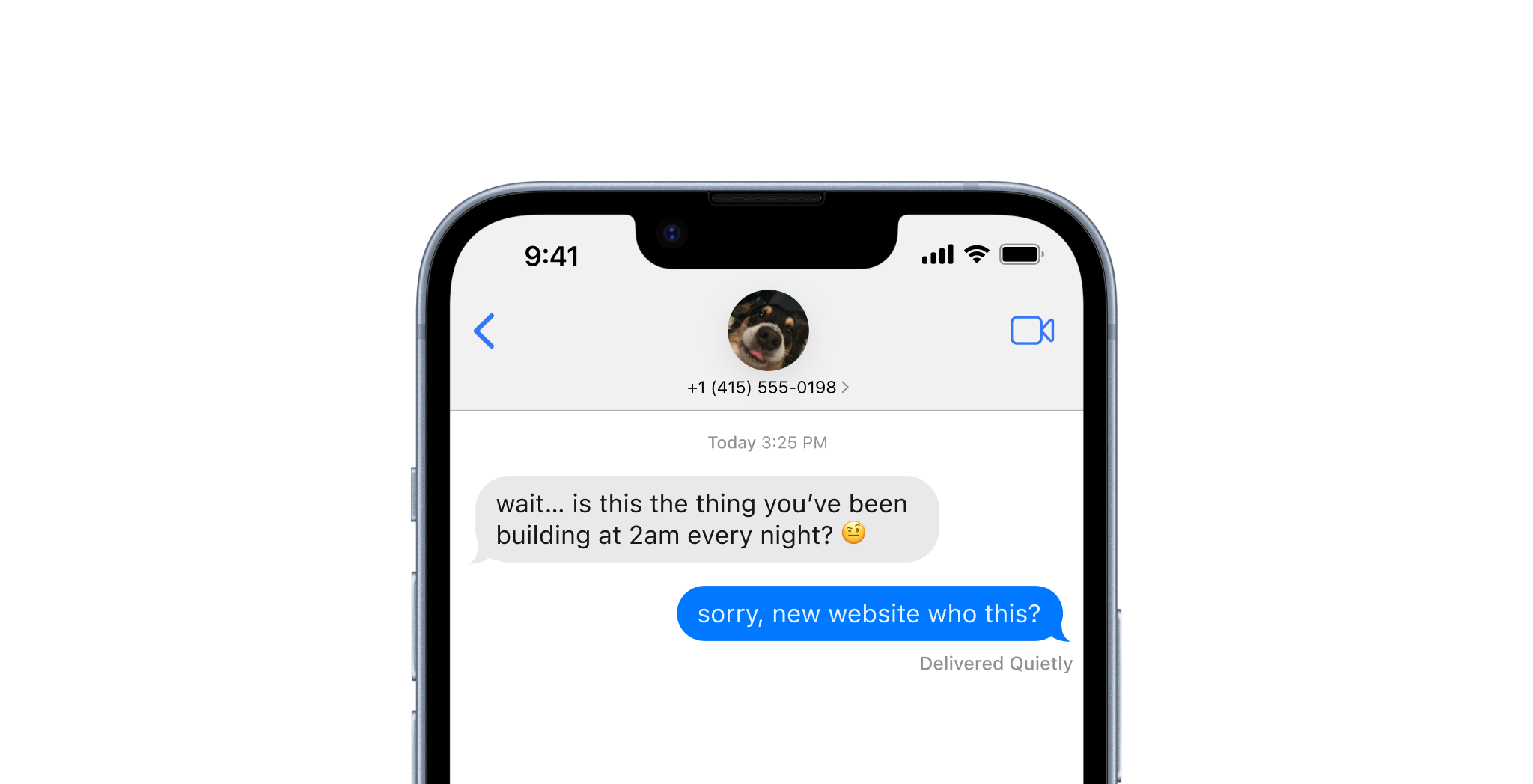
Hi there 👋! Welcome to my little corner of the internet, this will be a short article about who I am, which you can probably read all over the website, and about the website itself from tech stack to design and what not.
Who am I?
I'm Daniele, for all my non-Italian folks here, Dan or Daniel works. I'm, as of the time of writing this, a seventeen-year-old (almost eighteen) hobby developer. You might know me as the guy who made Beaver Notes, which, to be fair, is my biggest and most beloved project.
As a kid, I'd disassemble my toys just to understand how they worked. That instinct never really left me. When I was eight, my Italian teacher went on sick leave and summer was approaching. I was bored, and that's when I discovered my mom's old HP Pavilion gathering dust in the tv console. The battery was dead and the power cord was held together with tape, literally. I spent most of the time keeping a diary in the sticky notes widget, logging what we'd been doing in class so I could catch up my teacher when she came back.
From there it snowballed. At nine I talked my parents into buying me my own machine, spent hours customizing it, and fell down rabbit holes constantly, Chernobyl, nuclear reactors, whatever I was curious about that week. I found a Visual Studio tutorial on YouTube and built my first "antivirus," complete with an acid green background. I kept the old HP around for experiments, running Ubuntu and Puppy Linux in VirtualBox before eventually just installing Ubuntu directly, because I'd read it would make the laptop faster. I still remember pacing in front of the monitor, waiting for our slow DSL connection to finish downloading the ISO.
Eventually HTML and CSS clicked in a way other things hadn't. Building something I could actually see in a browser made it feel real. During the pandemic I spent a summer learning Python properly. In 8th grade a friend and I used a Tuesday afternoon extracurricular to build our own Linux distro, ITD-OS, built on Ubuntu with our own customizations, and somehow it ended up featured in the January 2022 edition of Linux Format, with a 6/10 score.
Late 2022 I got a proper machine and, after a short break, got the itch again. I was tired of note apps mangling my formatting, so I decided to build my own. That became Beaver Notes. I taught myself Vue by reading through Notething's source code line by line until I understood what each piece did, then used that as a foundation to build something of my own.
In July of that year I posted about Beaver Notes on Hacker News. I was fifteen and used ChatGPT to help write the post, trying to come across as more professional than I was. The response was critical. Fair enough. What I took from it wasn't embarrassment, it was that trying to sound like something you're not tends to backfire, and that being straightforward about who you are and where you're at is almost always the better move.
That lesson is part of why this website exists. Beaver Notes introduced me to people I wouldn't have met otherwise, pushed me outside my comfort zone, and eventually led me to places that once felt completely out of reach. I'm still tinkering. That part hasn't changed.
The website
When I started building, I knew I could either go with Vue and play it safe, or pick something new. I decided to risk it with SvelteKit, inspired by Pressappoco, a website made by Italian YouTuber Riccardo Palombo. It was the right call. Svelte clicked in a way that made the whole thing feel less like work and more like playing.
Building this was honestly a bit of an eye-opener. The past few years I've been so focused on shipping features that I'd kind of forgotten how satisfying design can be. This brought that back.
Design-wise, I wanted it to feel like a personal space rather than a portfolio. The bento grid on the homepage came together around that ideam, little cards that each do one thing, from the time clock showing Rome vs wherever you are, to the world map of places I've been, to Roy (my dog, say hi). The nav floats as a pill with a frosted glass blur, slightly inspired by Apple's own design language, dark mode is handled with a simple toggle, and the color palette stays deliberately neutral so the content does the talking.
For typography, I leaned on Tailwind for formatting and went with Vercel's Geist for titles and Manrope for everything else. Icons are all from Hackernoon's Pixel Icon Library. The only thing I'm still not sold on is the 404 page, but that's a problem for future me.
It's probably the most I've enjoyed building a UI in a while, which says something. Turns out caring about what you're making is half the battle, and I'm already bringing these lessons back to Beaver. You'll see more soon.